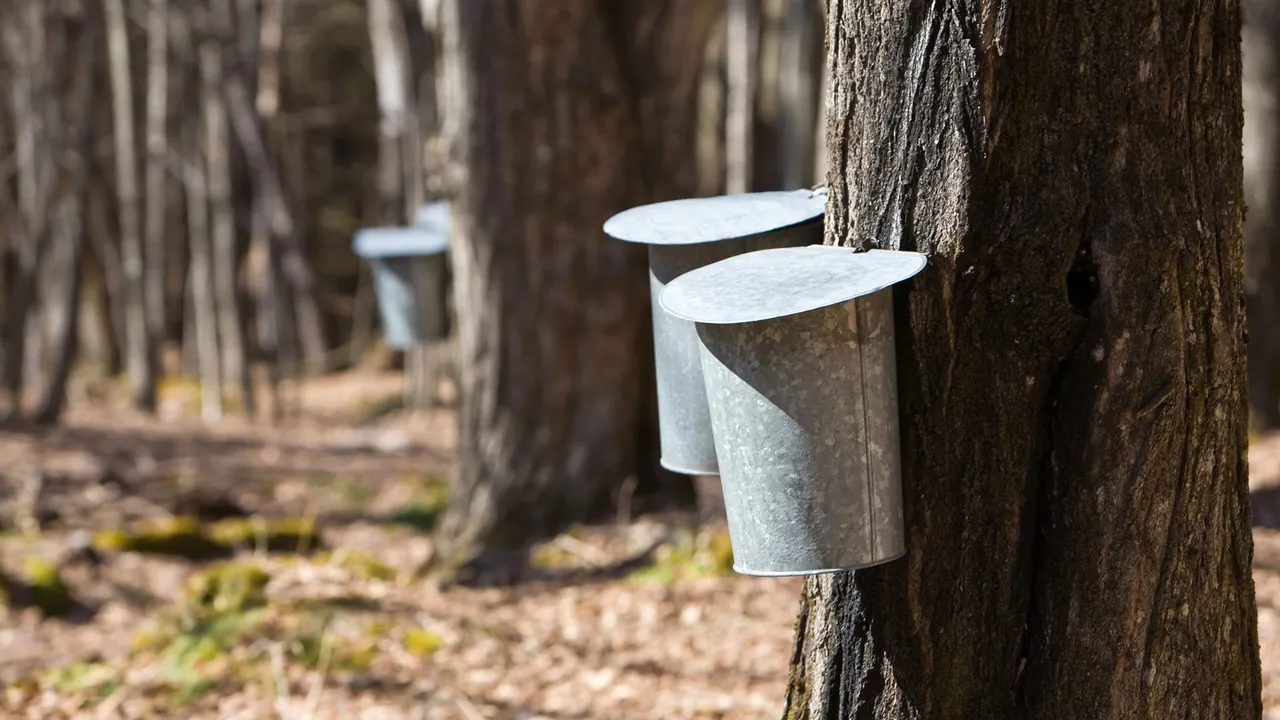
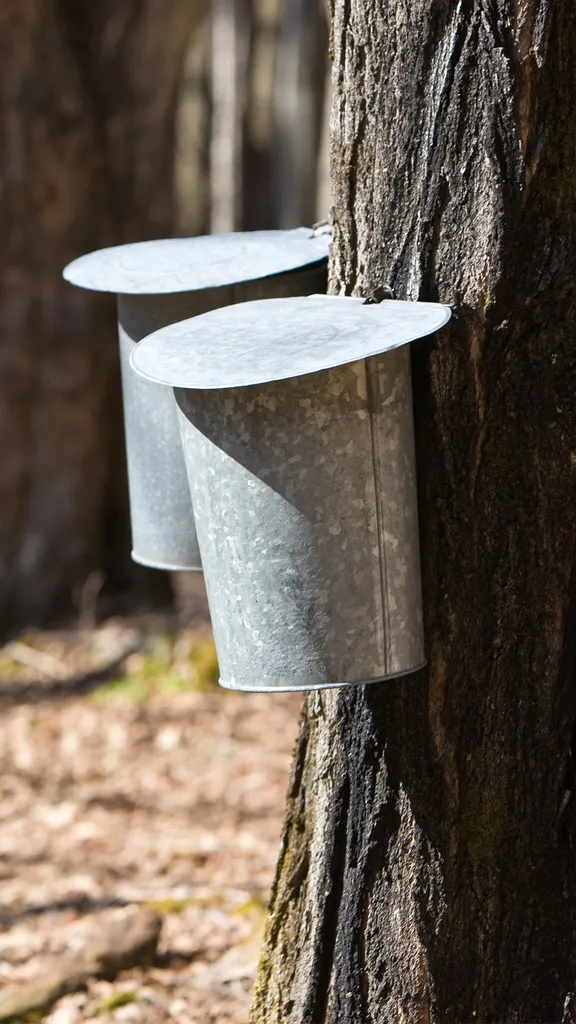
Buckets on maple trees collecting sap for maple syrup
The Great Canadian Maple Syrup Heist (2011–2012) saw nearly 3,000 tonnes of maple syrup stolen over several months from a Quebec storage facility.
Have you ever enjoyed a plate of pancakes drizzled with maple syrup? That sweet pour starts its journey on a maple tree, following a very particular rhythm in nature. In late winter, sugar maple trees are tapped when days rise above freezing and nights drop below—this freeze–thaw cycle pushes sap through the tree. The clear sap is collected, then boiled down for hours—about 40 litres to make just 1 litre of syrup. The season is brief, often lasting only a few weeks between February and April, so timing matters. Traditional buckets still exist, though many producers now use vacuum tubing to improve efficiency.
Not all maple syrup tastes the same. It is graded by colour and flavour: golden (delicate taste) comes early in the season, amber (rich) follows, while dark and very dark syrups appear later with a stronger, more robust flavour. Canada produces roughly 70–75% of the world's maple syrup. Quebec produces the majority of its output, with Ontario, New Brunswick and Nova Scotia also contributing. Beyond pancakes, it finds its way into baking, glazes and even coffee.