
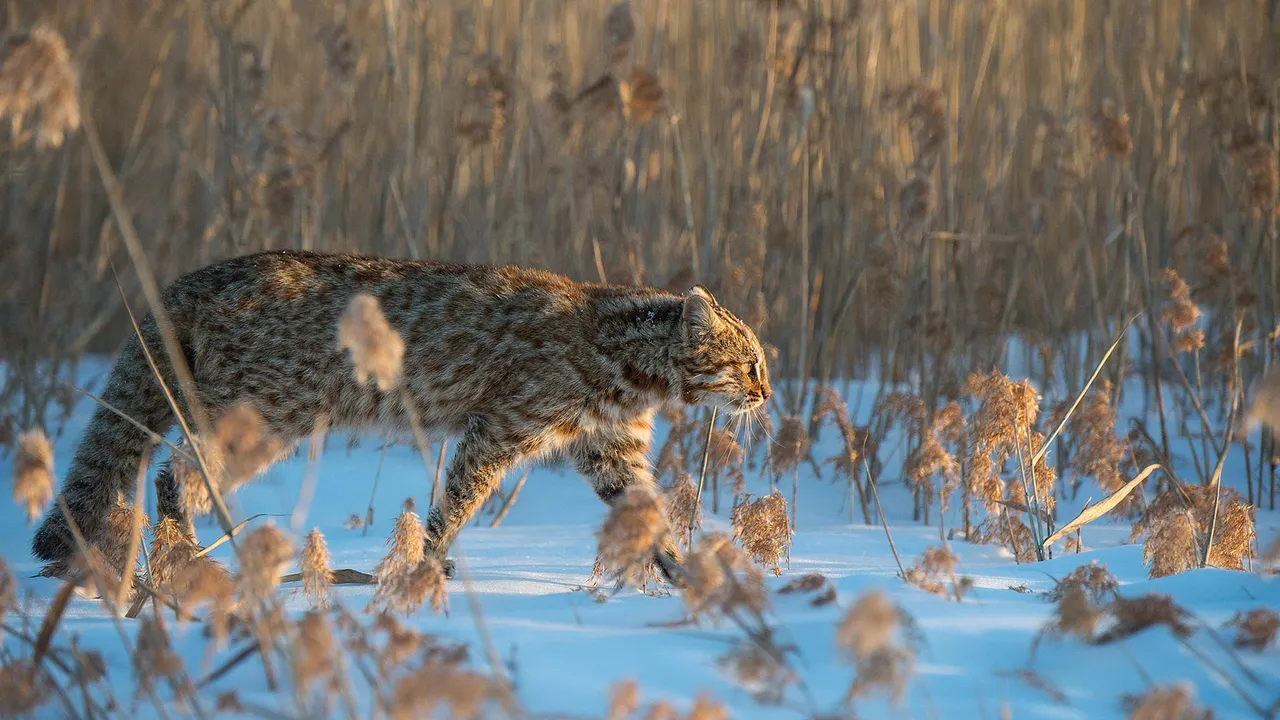
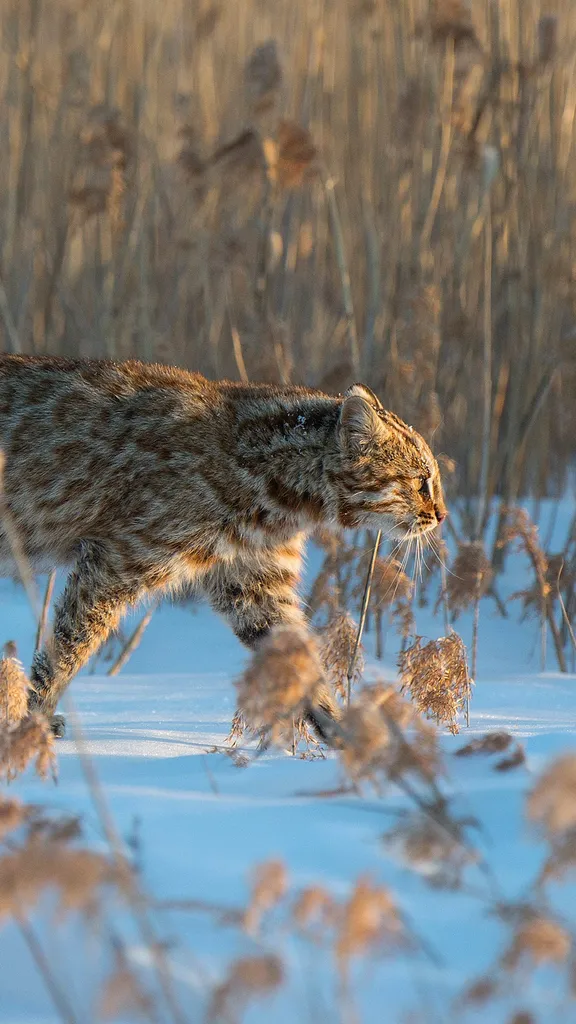
Amur leopard cat, Russia (© Valeriy Maleev/naturepl.com)
Leopard cats may have been the first cats domesticated in Neolithic China about 5,000 years ago.
The leopard cat is a small wild cat found across South, Southeast, and East Asia. Similar in size to a house cat but longer-legged and slenderer, it generally measures 38–76 centimetres long, with a tail about 18–30 centimetres. Depending on the region, adults weigh roughly 0.5–7 kilograms. Their appearance varies widely: southern individuals tend to have warm golden coats, while those farther north often have pale grey fur that thickens for winter.
This species has several living subspecies, each adapted to its environment. These include the Bengal leopard cat found from India through Southeast Asia; the Javan, Sumatran and Bornean leopard cats on the islands of Indonesia; and the Taiwan leopard cat. One of the most distinctive is seen in today's image: the Amur leopard cat, found in the Russian Far East, Manchuria, Korea and nearby islands. It's larger and paler than its southern relatives, with features suited to cold, snowy forests.
Leopard cats are mostly nocturnal hunters, preying on rodents, birds, reptiles and amphibians. They're adaptable too, living in forests, wetlands, mountains and even agricultural landscapes across their wide range.