
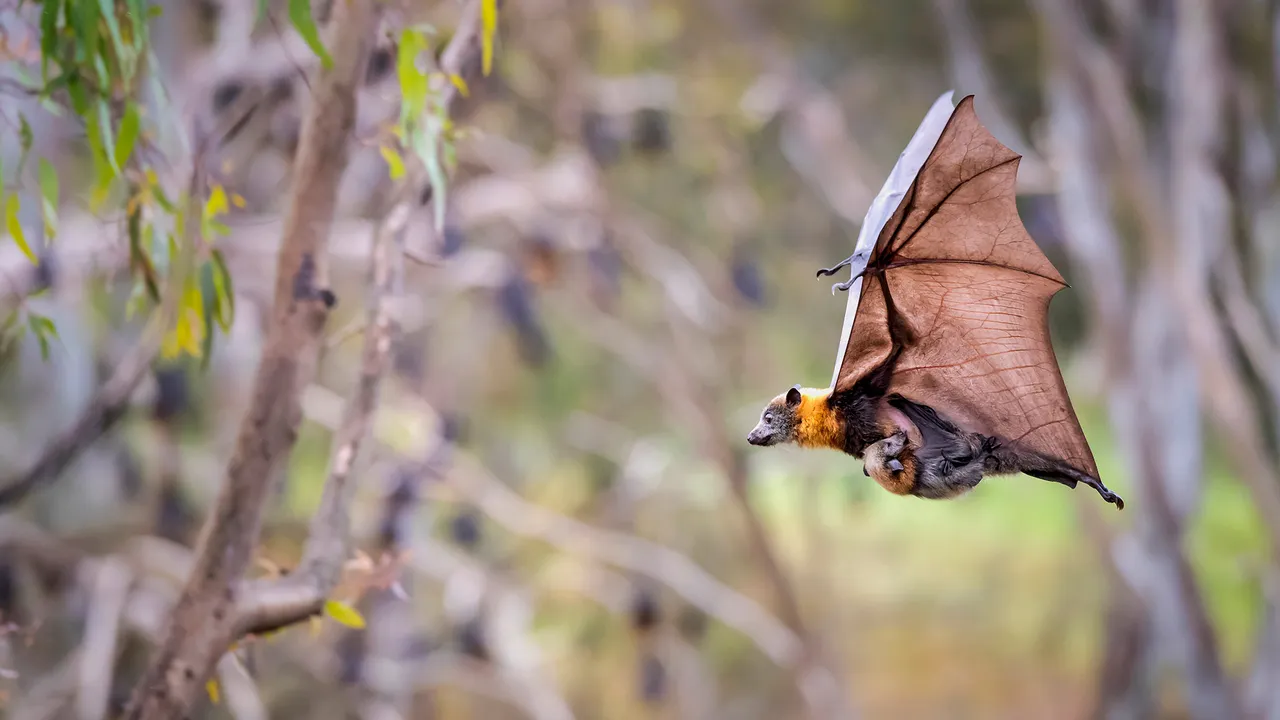
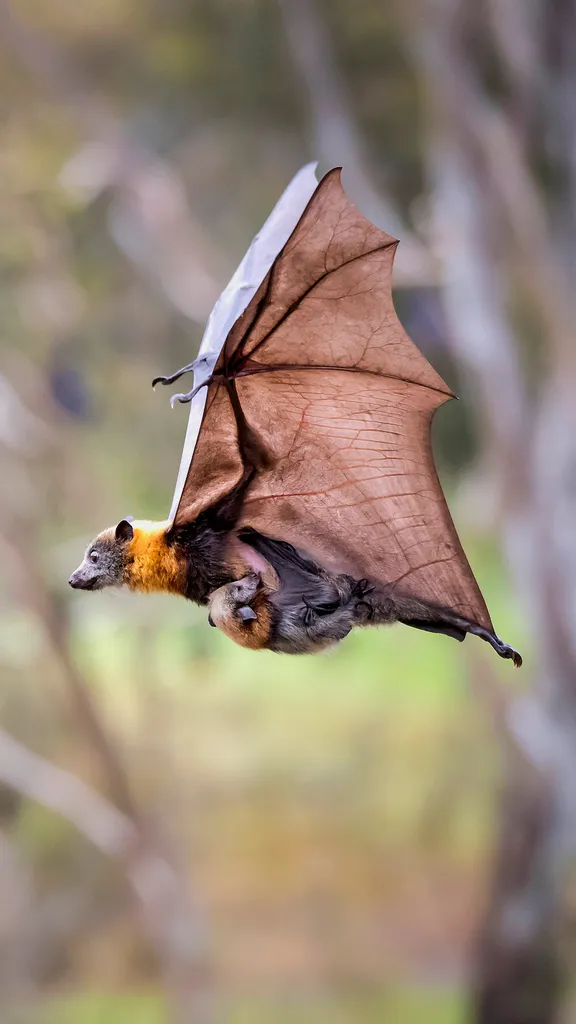
Grey-headed flying fox carrying her pup, Yarra Bend Park, Australia (© Doug Gimesy/Nature Picture Library)
On April 17, International Bat Appreciation Day flips its cape to the planet's night shift: bats. With more than 1,400 species on every continent except Antarctica, these winged mammals keep ecosystems balanced. They've been on Earth for over 50 million years, and only three species are true vampires. Found only in the Americas, these bats feed on blood, while the rest survive on insects, fruit, nectar or pollen. In Canada, bats such as the little brown bat and the big brown bat play a key role in controlling insect populations, consuming vast numbers of mosquitoes and agricultural pests each night, supporting both forests and farmlands.
In today's image, a grey-headed flying fox mum in Yarra Bend Park, Australia, carries her pup. One of the country's largest bats, she spans about 90 centimetres, navigates by sharp sight and smell—not echolocation—and flies up to 48 kilometres for figs and blossoms. Batman is fictional; the real bat-signal is conservation, as habitat loss and disease are shrinking populations.