
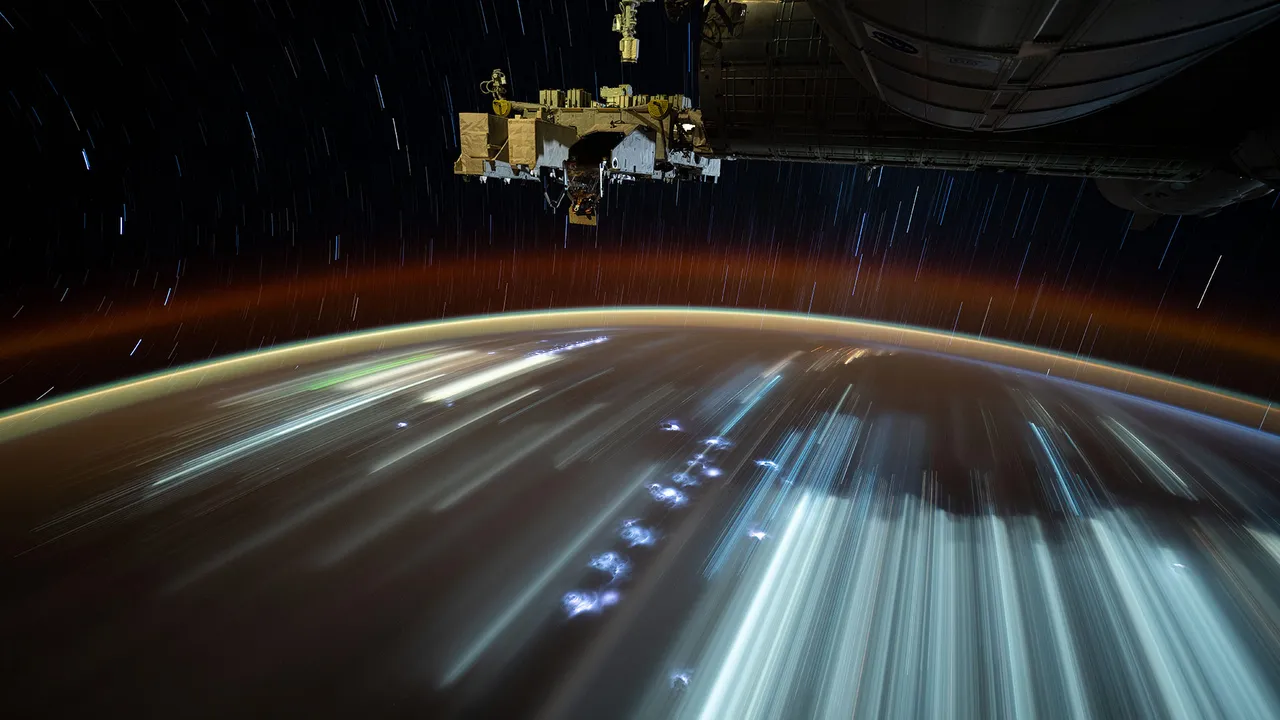
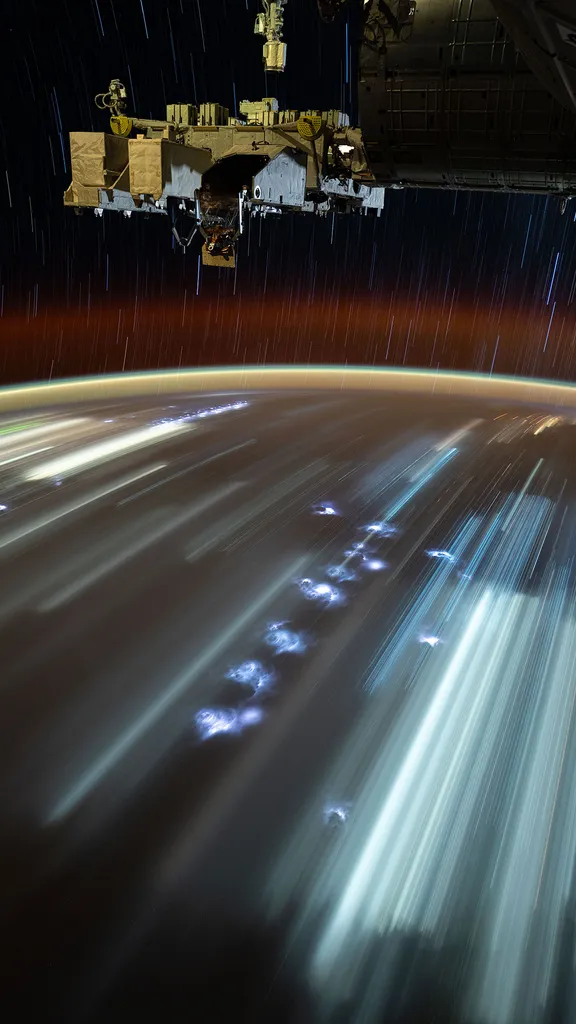
City lights streak below, taken from the International Space Station (© NASA)
The UN established the International Day of Human Space Flight in 2011, 50 years after the first human spaceflight.
Today, the world marks the International Day of Human Space Flight, a United Nations observance honouring the first human journey into space and the start of the space age for humanity. The date recalls April 12, 1961, when Yuri Gagarin orbited Earth, proving that people could leave the planet and return safely.
That spirit of exploration lives on aboard the International Space Station. From the ISS, astronauts photograph glowing city grids and powerful lightning storms streaking through Earth's atmosphere—views that turn science into magic. Orbiting about 400 kilometres above the planet, the station circles Earth every 90 minutes, giving crews up to 16 sunrises and sunsets a day. It has been continuously occupied since 2000 and is operated by a partnership of the United States, Canada, Russia, Europe and Japan. Inside, astronauts conduct research that advances medicine, materials and climate science, while also learning how humans can live and work farther from home.