
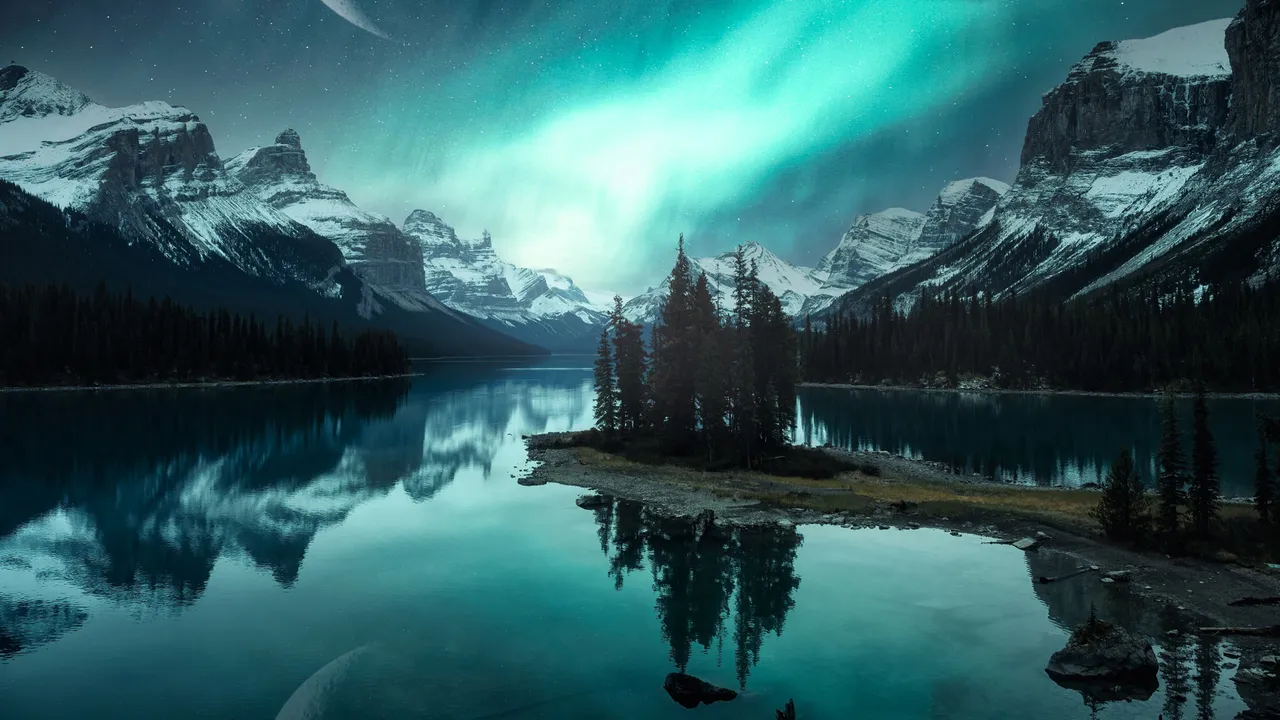
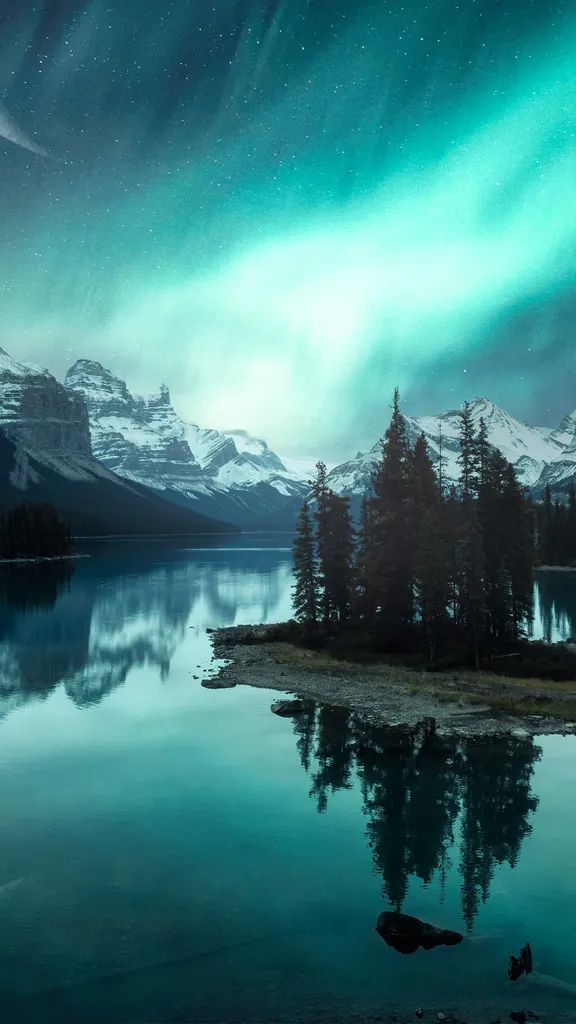
Aurora over Spirit Island on Maligne Lake, Jasper National Park, Alberta (© Mumemories/istock/Getty Images)
This is the kind of landscape that makes maps feel suddenly more interesting. Evening settles quietly over Maligne Lake in Jasper National Park, Alberta. As temperatures drop, the surface stills, mirroring snow-dusted peaks that formed during the last Ice Age. Stretching about 22 kilometres, the lake owes its existence to glacial movement that carved the valley and left behind meltwater basins. Today, cold, oxygen-rich freshwater sustains ecosystems that include species such as lake trout and mountain whitefish. Boat cruises and paddling routes offer one of the best ways to view Spirit Island, the small but widely photographed landmark featured in the image.
Beyond the shoreline, Jasper National Park continues the story. Established in 1907, it protects large wilderness corridors that allow animals to migrate across mountain ranges. Seasons change everything here, and nights add another chapter. As darkness settles, low light pollution makes it a prime setting for aurora viewing. Visibility tends to increase between October and March, when nights are longest and skies are often clearer. Imagine watching the lake reflect those moving lights overhead.