
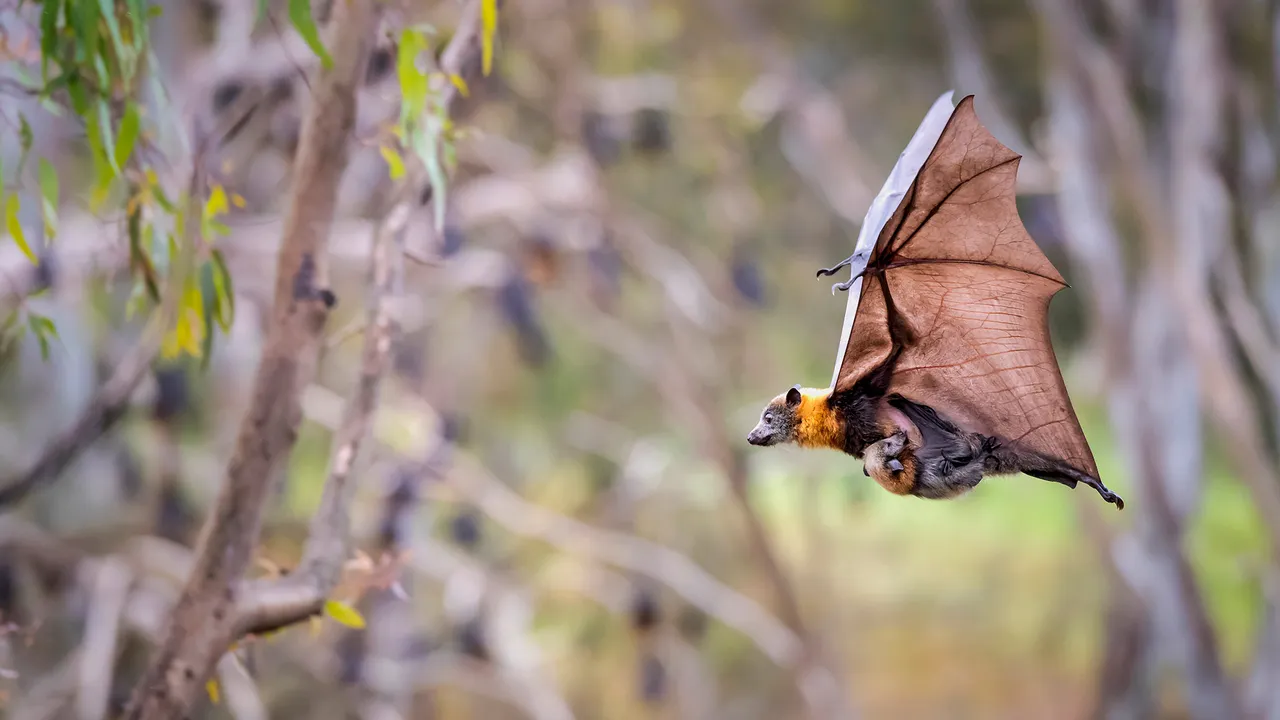
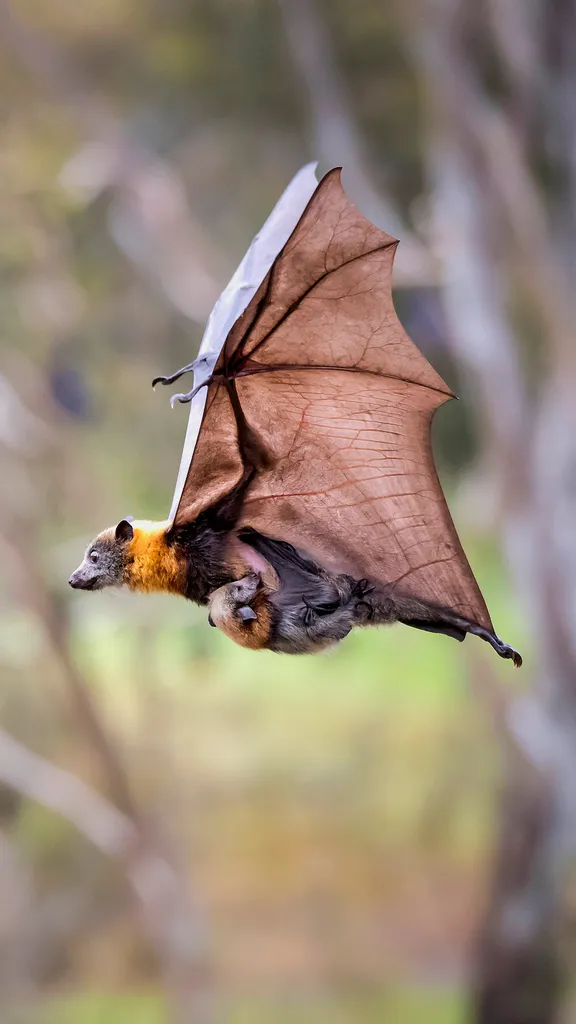
Grey-headed flying fox carrying her pup, Yarra Bend Park, Australia (© Doug Gimesy/Nature Picture Library)
When the sun sets, a mysterious animal takes over the skies: bats. With more than 1,400 species found on every continent except Antarctica, they play a vital role in keeping ecosystems in balance. They have existed for over 50 million years, and while only three species feed on blood, the vast majority rely on insects, fruit, nectar or pollen, helping to control pests and support plant life.
In today's image, a grey-headed flying fox mother in Yarra Bend Park, Australia, carries her pup. Among Australia's largest bats, this species can have a wingspan of up to one metre. Unlike many bats, it relies on keen eyesight and a strong sense of smell rather than echolocation to navigate. It feeds mainly on nectar, pollen and fruit, often travelling long distances each night between feeding sites. Grey-headed flying foxes are also key pollinators and seed dispersers, supporting native forests. Yet habitat loss, heat stress and disease have led to declining populations, making conservation efforts increasingly important.