
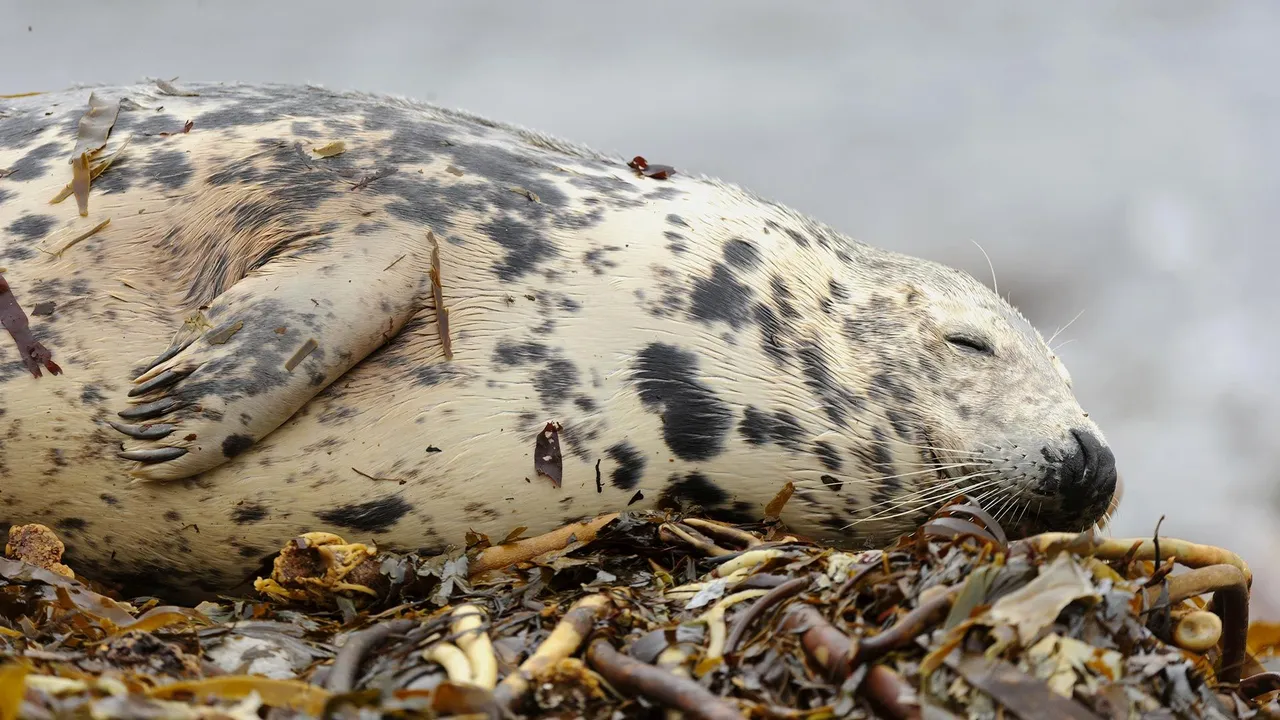
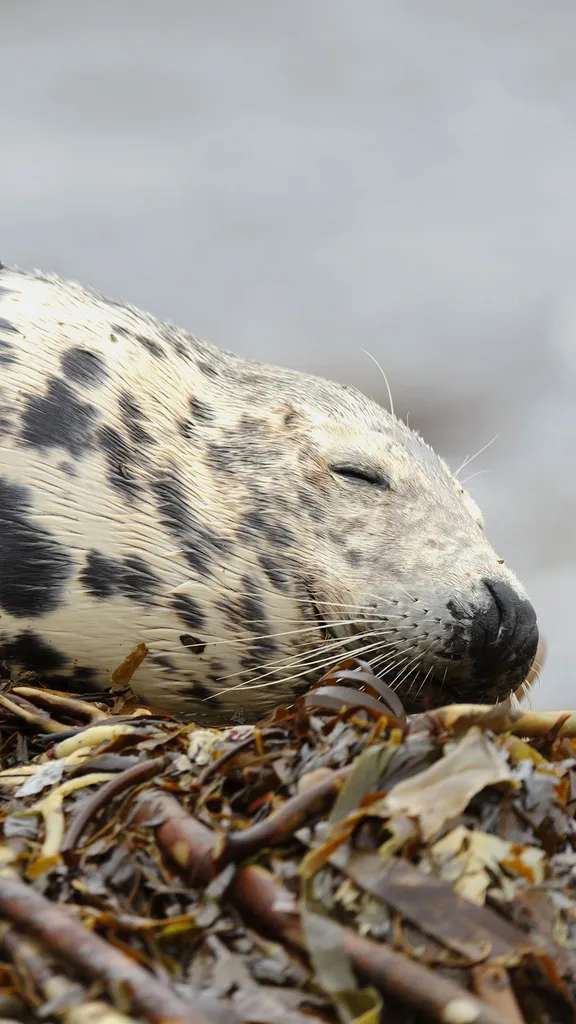
Grey seal sleeping on the beach, Orkney Islands, Scotland (© Andrew Mason/Minden Pictures)
Not all wildlife moments are dramatic—some unfold in perfect stillness. The grey seal resting on the shores of the Orkney Islands, Scotland, is a perfect example. Grey seals are among the UK's largest native marine mammals, with the country supporting around 40% of the world's population. Despite their size, they are remarkably adaptable sleepers. Rather than settling into one long stretch, grey seals nap in short, flexible bursts shaped by their surroundings.
At sea, they sleep lightly, often floating vertically or horizontally, waking regularly to surface for air. On land, especially along quiet beaches and remote rocky islands like those in Orkney, they can rest more deeply and for longer periods. This balance helps them conserve energy needed for long foraging trips and breeding seasons, when females nurse pups born with distinctive white coats. For grey seals, every well-timed nap is part of surviving life between land and sea each day.